
Computational engineering / CAE

Engineering
beyond limits.

Understand complex physics. Optimize designs. Make better engineering decisions with computational fluid dynamics, finite element analysis and thermal simulation.

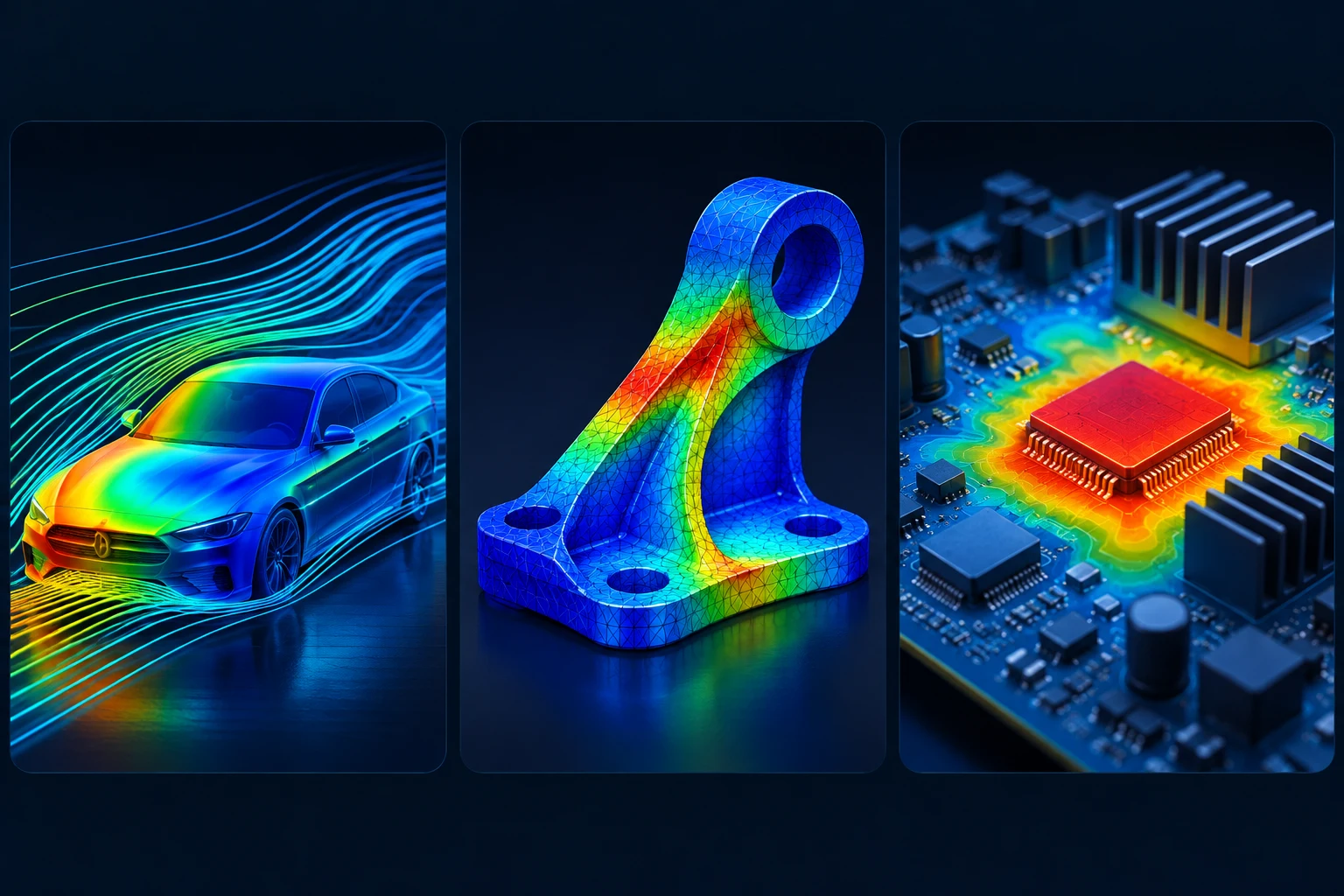
Illustrative aerodynamic flow, structural stress and circuit board temperature visualizations
Illustrative simulation imagery
CFD
Fluid flow & aerodynamics
FEM / FEA
Structural mechanics
Thermal & multiphysics
Heat transfer & coupled physics
01 / Capabilities

Simulation-driven engineering.

Numerical simulation reveals how products and systems respond to real operating conditions, helping identify potential issues and evaluate design alternatives before physical testing.

Illustration of streamlines around a vehicle
01 / CFD

Computational Fluid Dynamics

Analyze fluid motion, pressure losses, turbulence and heat transport to improve performance and understand complex flow behavior.

  • Internal and external aerodynamics
  • HVAC, ventilation and gas dispersion
  • Pressure drop and flow distribution
  • Steady and transient flow analysis
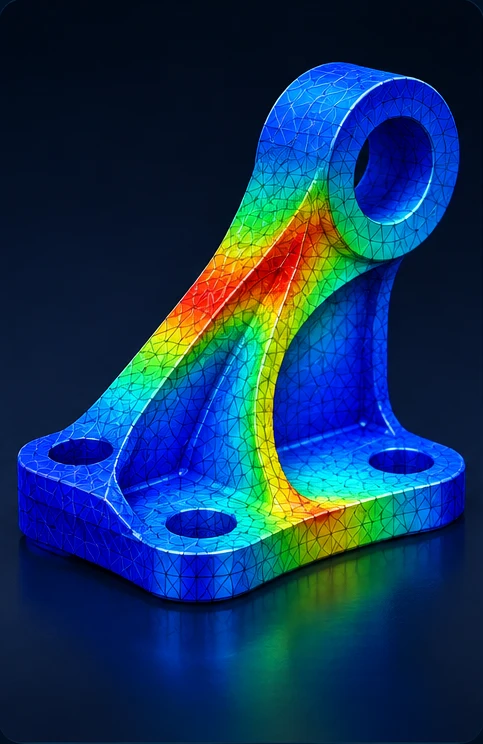
Illustrative finite element mesh and stress contours on a bracket
02 / FEM

Finite Element Analysis

Evaluate the mechanical response of components and assemblies under representative loads and boundary conditions.

  • Linear and nonlinear structural analysis
  • Stress, strain and deformation
  • Modal, vibration and buckling analysis
  • Fatigue assessment and design optimization
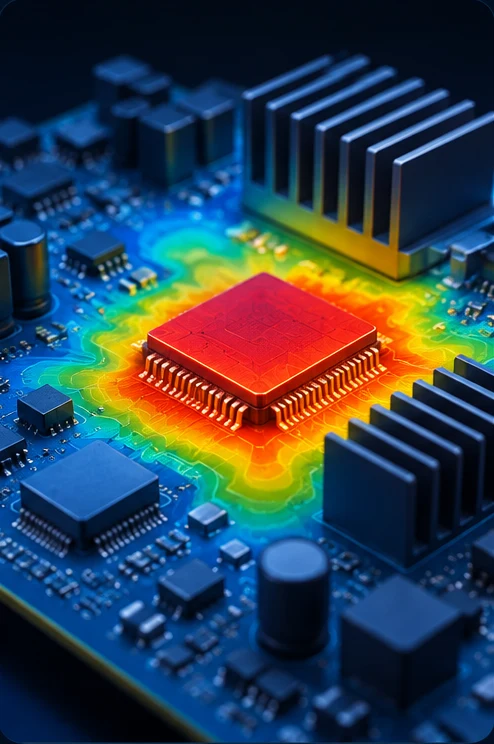
Illustrative temperature contours on electronics
03 / THERMAL

Thermal & Multiphysics

Assess temperature distributions, cooling efficiency and thermal interactions between fluids, solids and mechanical structures.

  • Electronics and enclosure cooling
  • Conduction, convection and radiation
  • Conjugate heat transfer
  • Thermal expansion and thermomechanics
02 / Applications

Built for real engineering challenges.

From individual components to complex industrial systems, CAE can support development, troubleshooting and performance optimization across a wide range of sectors.

Automotive & mobility
Industrial machinery
Electronics & electrical systems
HVAC & building engineering
Energy & power systems
Product development
03 / Methodology

Physics first.
Results that matter.

Reliable analysis requires more than a colorful contour plot. A sound simulation workflow begins with clearly defined engineering objectives and ends with an assessment of assumptions, numerical accuracy and practical implications.

01

Define the problem

Establish objectives, load cases, operating conditions and acceptance criteria.

02

Build the numerical model

Prepare geometry, mesh, material properties and appropriate physical models.

03

Solve and assess

Evaluate convergence, sensitivity and physical consistency; compare with reference data where available.

04

Interpret and report

Translate numerical results into engineering insights, limitations and actionable recommendations.

04 / Get in touch

Have an engineering challenge?

Prepare a brief describing your application, design objectives and available technical information. This helps define the appropriate simulation strategy and project scope.

Your inquiry is processed by FormSubmit and sent to NTPSYM Engineering. Please do not include confidential technical data.